Electric vehicle production involves a range of design and manufacturing considerations. Battery systems, electronic components, lightweight structures, interior assemblies, and acoustic requirements can all influence the materials and joining methods considered during development. Adhesive materials can play a role in some of these applications, depending on the requirements of the individual component.
A technical team searching for what is Thinsulate may, for example, be exploring acoustic insulation materials for areas of a vehicle where noise management is relevant. 3M Thinsulate Acoustic Insulation is available in automotive grades designed for sound absorption, but insulation is only one of many material considerations that can arise in an electric vehicle project.
When adhesive materials are involved, choosing a product is only part of the process. The substrates, available space, geometry, operating conditions, and assembly process can influence which adhesive material or converted configuration may be suitable. Bonding requirements therefore need to be examined in relation to the individual application.
The shape of the part can change the approach
A material supplied in a roll may need to become a component with a specific geometry before it can be used in an assembly. For instance, die cutting is one of the processes that can transform suitable flexible materials into defined shapes and sizes. The appropriate converting method, however, depends on factors such as material construction, part geometry, and project specifications.
Available space can influence the component design as well. A converted adhesive part may need to fit around openings, follow a particular contour, or leave selected areas uncovered. These requirements can affect not only its external dimensions but also details such as internal cut-outs and narrow sections.
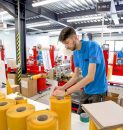
Working with a 3M Preferred Converter can be relevant when adhesive materials need to be converted into configurations developed for specific industrial applications. A specialized converter can process adhesive tapes, foams, films, and other flexible materials using different converting technologies, depending on the requirements established for the project.
Several additional details can provide useful information before production begins:
- The latest revision of the technical drawing
- The quantities planned for the relevant production stage
- Dimensional requirements defined for the component
- Any restrictions associated with subsequent manufacturing operations
- Changes made to the design since an earlier version was evaluated
The bonding surface matters
Electric vehicles contain many types of materials and finishes, and an adhesive solution needs to be considered in relation to the surfaces it will contact. Plastics, metals, glass, coated surfaces, and other substrates can present different bonding characteristics. Surface condition and preparation can also influence how an adhesive material behaves in a particular application.
Operating conditions can also influence material selection. Depending on where a component is located, temperature, moisture, mechanical stresses, or exposure to other environmental factors may be relevant. The conditions that matter need to be identified according to the actual location and function of the part rather than treated as universal requirements.
Material selection can involve other characteristics that depend on the particular application. The table below illustrates several questions that may become relevant without repeating the surface and environmental factors discussed above:
| Material consideration | Question to examine |
| Construction | Is a single material sufficient or does the project involve multiple compatible layers? |
| Liner | Does the selected construction include a liner suited to the intended handling process? |
| Final format | How does the material need to be presented after conversion? |
Assembly brings its own practical challenges
A converted component also needs to fit into the manufacturing process that follows. Requirements related to manual or automated assembly can affect how the part is configured and presented. For this reason, downstream production needs can be considered before larger quantities are produced rather than only after the component reaches the assembly line.
Samples and prototypes can help teams examine a proposed configuration in relation to known project requirements. They provide a physical component that can be evaluated before moving towards larger production quantities. If the surrounding assembly or relevant specifications change, the converted configuration may need to be reconsidered.
Several practical questions can become relevant during this stage:
- Is the component easy to identify and orient?
- Can the liner be accessed in the intended application sequence?
- Is there sufficient access to the area where the part will be positioned?
- Does the delivery format correspond to the planned handling method?
- Can the component be handled as intended by the relevant production process?
These questions are separate from validating the complete vehicle or final product. Their purpose is to examine how the converted component fits into the manufacturing context in which it is expected to be used.
Decisions that begin with the application
Bonding challenges in electric vehicle assembly vary according to the component and its role within the vehicle. A solution that is appropriate in one area cannot automatically be transferred to another, even when the applications appear similar.
Specialized conversion can turn suitable flexible materials into custom components based on defined project requirements, while samples can support evaluation before larger quantities are considered. Final validation remains part of the manufacturer’s own development and qualification process.