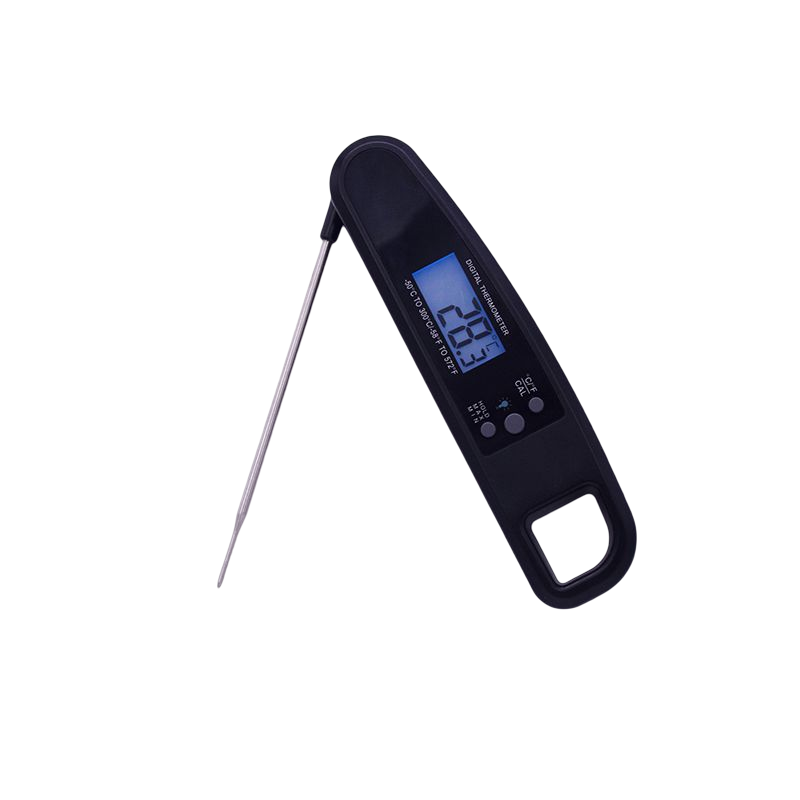
To calibrate a probe drain dial food thermometer, you can follow these steps:
Prepare boiling water: Fill a pot with water and bring it to a boil. Make sure there is enough water to immerse the probe of the thermometer.
Prepare ice water: Fill a glass or bowl with crushed ice and add enough water to cover the ice. Stir the mixture to ensure it is evenly cold.
Set the boiling point: Immerse the probe of the thermometer into the boiling water, making sure it does not touch the sides or bottom of the pot. Allow the thermometer to sit in the boiling water for a few minutes until the reading stabilizes.
Adjust the calibration nut: While the probe is in the boiling water, check the reading on the thermometer. Compare it to the boiling point of water at your location, which is typically 212°F (100°C) at sea level.
If the reading is higher or lower than the expected boiling point, look for the calibration nut on the thermometer. It is usually located beneath the dial or near the base of the probe.
Use a small wrench or screwdriver to turn the calibration nut. Some thermometers may have a set screw that needs to be adjusted. Refer to the manufacturer’s instructions for your specific thermometer.
Rotate the calibration nut or adjust the set screw in the appropriate direction to adjust the reading. Typically, turning clockwise increases the reading, while turning counterclockwise decreases it.
Check the freezing point: After making the adjustment, remove the probe from the boiling water and pat it dry with a clean cloth or paper towel.
Immerse the probe in the ice water, again making sure it doesn’t touch the sides or bottom of the container. Wait for the reading to stabilize.
Verify the calibration: The reading should now match the freezing point of water, which is typically 32°F (0°C). If the reading is different, repeat the adjustment process until it matches.
Remember to consult the specific instructions provided by the manufacturer for your probe drain dial food thermometer, as the calibration procedure may vary slightly for different models. Regular calibration is important for accurate temperature measurement, so consider calibrating your thermometer periodically or whenever you suspect inaccurate readings.